//Telegram bots
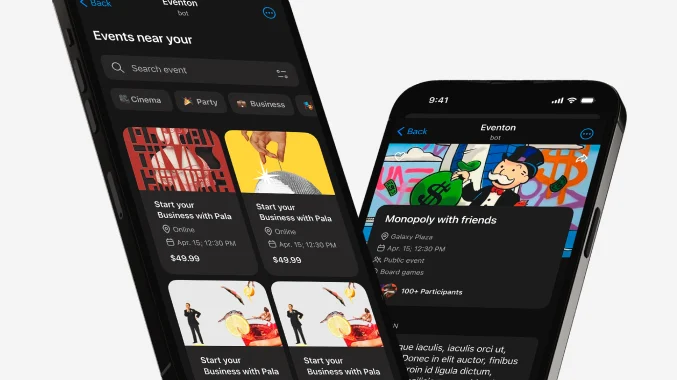
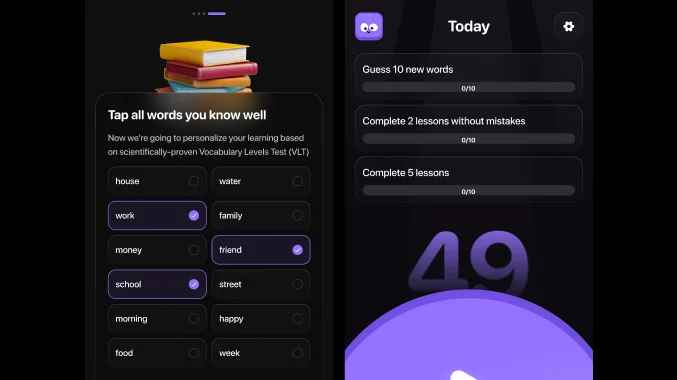
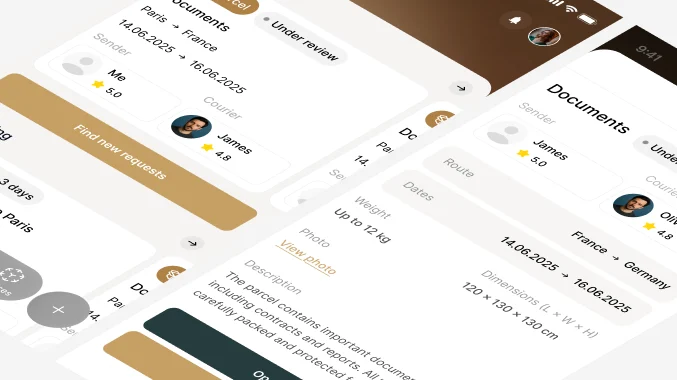
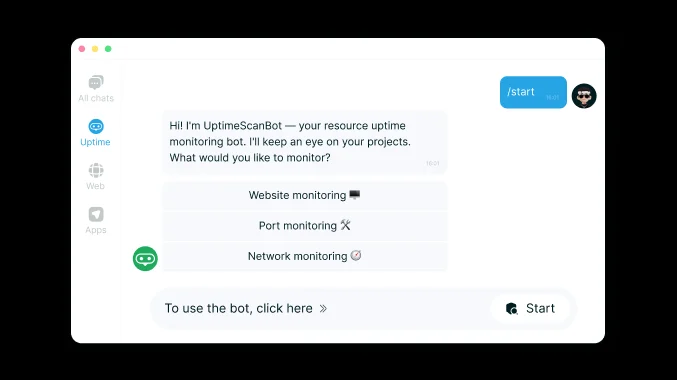
Telegram bots and mini apps, built to run in production
A bot is not a chat script — it is a product with a database, a scheduler, an admin panel and an on-call story. We build them the way we build web products: the flow mapped before the code, the state in a real database, and an interface your team can edit without calling us. Lithuania and across Europe.
What our Telegram development covers...
Bots — onboarding, support, sales flows
Best for a brochure site, landing page, or clearly scoped feature. Fixed price, fixed timeline.
Mini apps — a real interface inside Telegram
Best for a brochure site, landing page, or clearly scoped feature. Fixed price, fixed timeline.
Funnels and push sequences by segment
Best for a brochure site, landing page, or clearly scoped feature. Fixed price, fixed timeline.
An admin panel your team can actually use
Best for a brochure site, landing page, or clearly scoped feature. Fixed price, fixed timeline.
Payments, subscriptions and Stars
Best for a brochure site, landing page, or clearly scoped feature. Fixed price, fixed timeline.
Integrations — CRM, analytics, your backend
Best for a brochure site, landing page, or clearly scoped feature. Fixed price, fixed timeline.
1 wk+
from brief to a first version people can use, for a simple flow
€1K
where a funnel bot with an admin panel starts
100%
of the code, the database and the panel handed to you
3 mo
warranty and support after launch, included
//how we build it
How we build a Telegram product
[01]
Map the flow
Every message, every branch, every dead end written out before anyone opens an editor. This is where most bot projects are won or lost.
[02]
Build the spine
Bot, database, scheduler, admin panel. Boring infrastructure first, because everything after it depends on the state being right.
[03]
Content and segments
The funnel messages, the push sequences per stage, the timing. Editable by your team afterwards, not hard-coded by us.
[04]
Launch and watch
Real users find the branch you forgot within a day. We stay on it through the first weeks, then hand over or keep operating it.
//bot, mini app, or neither
Which one you actually need
These three get confused constantly, and picking the wrong one costs a rebuild. The honest version is that a bot is a conversation, a mini app is a screen, and a website is still a website — and plenty of projects need two of the three, in a specific order.
//from €1,000
A bot
Message in, message out. Best when the job is a sequence: qualify a lead, deliver a lesson, take a booking, answer the same forty questions.
you can message the user again, for free, forever
no interface to design, so it ships fastest
bad fit for browsing, filtering, or a catalog
//from €5,000
A mini app
A full web interface that opens inside Telegram, already logged in. Best for catalogs, bookings, dashboards, anything with more than one screen.
no install, no password, no app store review
payments and identity come with the platform
it is a web app — it needs design and QA like one
//honest answer
Neither, yet
If your customers are not already in Telegram, a bot is a channel with nobody in it. Sometimes the right first build is the website, and the bot is phase two.
SEO and search cannot see inside Telegram
you depend on one platform’s rules
we will say this on the first call if it applies
//the proof
Built to still work in a year
Most agencies write a bot, hand over a zip and never see it again. We build for the second year, not the launch week: reusable flow structures so a funnel change does not mean a rewrite, push sequences per segment, scheduled broadcasts with per-recipient delivery logs, a user base with full history, and integrations back into your own systems. Every one of those exists because something broke at 2am and we were the ones awake.
None of it is a licensed product with our name on the login. It is a way of building, sized to your project, delivered as code you own with an admin panel your own team runs.
[01]
Reusable flow structures
one funnel, applied to many bots, versioned
[02]
Segmented push
a different sequence per funnel stage, not one blast
[03]
Broadcast with delivery logs
scheduled, cancellable, and honest about failures
[04]
CRM and backend sync
the bot user and your own record, in one row
[05]
Multi-bot isolation
several bots or brands, no mixed numbers, no shared state
//the objections
What you are probably thinking
Telegram development attracts two opposite assumptions — that a bot is trivial, and that a mini app is a mobile app. Both cost money. Here is what we actually say.

“A bot is a weekend project.”
The conversation is. The database, the scheduler that survives a restart, the admin panel, the retry logic when Telegram rate-limits you, the migration when you change the funnel with 40,000 people mid-way through it — that is the project. We have hit all of them, which is why our estimates look the way they do.

“Can we use a no-code builder instead?”
For a linear flow with a few hundred users, genuinely yes — and we will tell you so rather than sell you a build. The ceiling arrives with payments, your own database, a real integration, or volume. Several of our projects started as a builder and moved once it stopped fitting.

“What if Telegram changes the rules?”
A real risk, and the reason we keep the business logic and the data on your infrastructure rather than inside the bot. A mini app is a web app — if the platform moves, it can be pointed at a browser. Platform dependency is worth taking knowingly, not by accident.

“Our users are not on Telegram.”
Then do not build here. This is the most common honest no we give. Telegram works when your audience already lives there — communities, crypto, gaming, expat and CIS markets, internal teams. In classic Lithuanian B2B it usually does not, and we will point you at the website instead.

“Who runs it after launch?”
Your choice, and both are normal. Either your team gets the admin panel and edits the funnel themselves, or we keep operating it monthly under a support retainer. Handover includes the code, the database and a walkthrough either way.

“Is it GDPR-safe to hold users there?”
It can be. The bot holds an ID and whatever you asked for; the personal data sits in your database, in your region, with deletion on request built in from the start. We have done this for clients operating across the EU, and the design decisions are made at the beginning rather than retrofitted.
//case studies
Three builds, anonymised
Client names stay private. The shape of the work does not. Scope and timings are typical for builds of this size. Yours is quoted after the scoping call.
onboarding bot
A funnel that held at scale
New users landed in a bot rather than on a page. Five funnel messages, push sequences for the people who stalled, and every user graded by stage so the team could see exactly where the drop was — and change one message rather than rebuild the flow.
funnel steps
5
push sequences
3 segments
build time
5 weeks
mini app
A catalog that opens without an install
Browsing, cart and checkout inside Telegram, with the account already authenticated. The same backend feeds the website, so stock and prices never disagree.
screens
9
steps to checkout
3
build time
9 weeks
internal tool
Took the ops team out of spreadsheets
A bot for field staff: submit a job, attach a photo, get the next assignment. No app to install on shared phones, and it works on whatever handset someone brought.
rollout
one afternoon
training needed
none
build time
4 weeks
//what it costs
Three sizes, and what sits behind each
These are starting points from real builds, not a price list. The scoping call turns one of them into a fixed number — or tells you the project belongs in a different row.
FUNNEL BOT
from €1K
from 1 week · scales with the flow
Onboarding flow, segments, push sequences, admin panel, one integration.
MINI APP
from €5K
6–14 weeks · scales with the screens
Designed interface, backend, payments, the bot around it, QA on real devices.
WE OPERATE IT
from €199
per month, rolling
Hosting, monitoring, content changes, new funnel steps, broadcasts on request.
//questions
Telegram development questions, answered
Can we edit the bot ourselves afterwards?
That is what the admin panel is for. Message text, timing, funnel steps and broadcasts are editable without a developer. Anything structural — a new integration, a new payment flow — is a change request, and we quote it.
Do you take payments inside Telegram?
Yes — through Telegram Payments with a provider like Stripe, through Stars for digital goods, or by handing off to your existing checkout. Which one is right depends on what you sell and where your customers are.
Where does it run, and who pays for hosting?
On a VPS in the EU, typically €20–60 a month depending on volume, billed to you directly or included if we operate it. You get the Docker setup and the deployment pipeline, so moving it elsewhere later is not a rescue project.
Can you take over a bot someone else built?
Often, yes. We start with a short audit of the code and the data, then say honestly whether it is worth continuing or rebuilding. Rebuilding is the answer more often with no-code exports than with real code.
How do people find the bot?
Through whatever you already have — a link on the site, a QR code in a shop, your existing channel, an email footer, a support handoff. We build the entry points into the flow map at the start, because a bot nobody can reach is the most common way these projects quietly fail.
//tools
What we build it on



Telegram Payments
Pricing
fixed price, time and materials, or a dedicated team
Mobile development
when it has to be a real app in the store
Web development
the landing page half of the problem
//contact us
Tell us the flow. We will tell you the size of it.
Thirty minutes, free, with a developer rather than a salesperson. We sketch the flow on screen, flag the parts that are more expensive than they look, and come back within a working day with a scope and a number — or with a reason not to build it.