//Email marketing
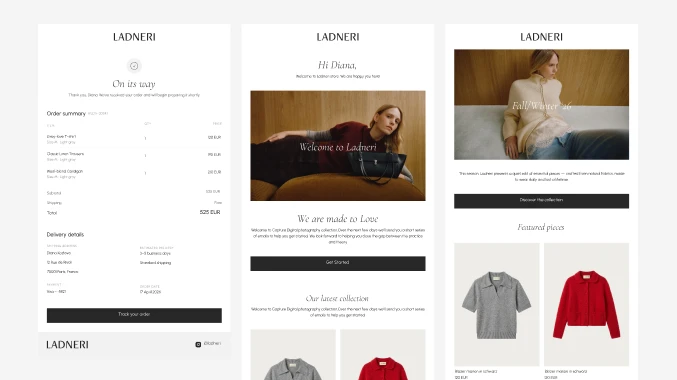

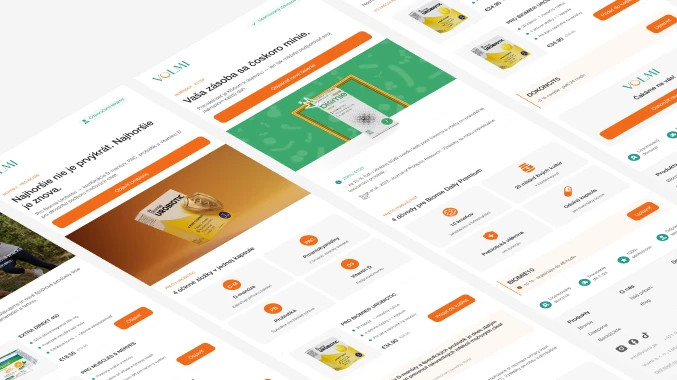
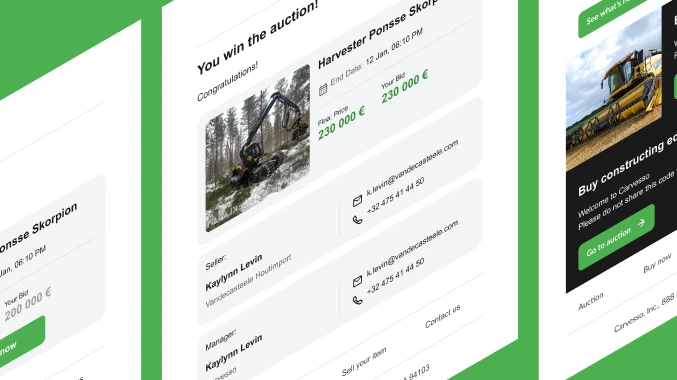
Email marketing and Klaviyo, done as engineering
We set up Klaviyo, build the automated flows, fix the tracking underneath them and run the campaign calendar — for e-commerce and subscription businesses in Lithuania and across Europe. It is the only channel where the audience belongs to you rather than to a platform, and the only one where a good week of work keeps earning eighteen months later.
What this work covers...
Klaviyo setup, or migration onto it
Best for a brochure site, landing page, or clearly scoped feature. Fixed price, fixed timeline.
The automated flows that earn while you sleep
Best for a brochure site, landing page, or clearly scoped feature. Fixed price, fixed timeline.
Segmentation built on behaviour, not guesses
Best for a brochure site, landing page, or clearly scoped feature. Fixed price, fixed timeline.
Campaign calendar, written and designed
Best for a brochure site, landing page, or clearly scoped feature. Fixed price, fixed timeline.
Deliverability — domain, warm-up, list hygiene
Best for a brochure site, landing page, or clearly scoped feature. Fixed price, fixed timeline.
Tracking and integration with your store
Best for a brochure site, landing page, or clearly scoped feature. Fixed price, fixed timeline.
20–35%
of e-commerce revenue email typically carries once flows are live
~2%
of sends are flows — and they produce about half the revenue
3 wks
from kickoff to the core flows sending on your data
0
platform fees to us — you own the Klaviyo account and the list
//the flows
Seven flows carry almost everything
Campaigns are the visible part of email and the smaller half of the money. The flows are what runs without anyone touching it: triggered by behaviour, sent at the moment it matters, and still earning a year after they were written. We build these first, in this order, because that is the order they pay back in.
//biggest
Abandoned checkout
Three emails over two days to someone who was holding their card. The highest-intent audience you will ever email.
trigger · started checkout, did not buy
//first to build
Welcome series
Four to five emails after signup, while interest is at its peak. This is also where the discount habit gets set, for better or worse.
trigger · joined the list
//underused
Browse abandonment
Looked at a product, left without adding it. Weaker intent than a cart, far more volume, and almost nobody in the Baltics runs it.
trigger · viewed product, no add
//underused
Browse abandonment
Looked at a product, left without adding it. Weaker intent than a cart, far more volume, and almost nobody in the Baltics runs it.
trigger · viewed product, no add
//repeat
Replenishment
Timed to when the thing they bought runs out. Only works for consumables, and when it works it is the cheapest revenue in the account.
trigger · days since purchase
//rescue
Win-back
For customers who stopped. Low response rate by nature, but the alternative is paying to acquire the same person twice.
trigger · inactive N days
//hygiene
Sunset
Stops mailing people who never open. Shrinks your list and your bill, and raises the inbox placement of everything else you send.
trigger · no engagement, long window
Then the calendar
Once the flows run, campaigns stop being the whole strategy and become the part that adds news, launches and seasons on top.
//the argument
The one channel you are not renting
Everything else on our marketing pages is rented. Stop paying Google and the traffic stops the same afternoon; Meta can restrict an account overnight; a platform can change its rules and take a third of your reach with it. An email list is the one asset in the mix that you keep, export and take with you.
That also changes how the two should be judged together. Paid acquisition buys a first order, often at a cost per customer that only makes sense if there is a second one. Email is what produces the second one. Run them separately and paid looks unaffordable; run them as one system and the maths usually works.
This is also why we do not treat email as a design job. Half the work is in the store, the events and the data model — which is the half most email agencies quietly skip.
[01]
We can fix the store, not just the email
a missing event or a broken checkout is a development ticket, and we take it
[02]
Custom events, not just the defaults
a flow can trigger on anything your product knows, if someone writes it
[03]
The data agrees with itself
Klaviyo, GA4 and the back office reconciled, so one number wins the meeting
[04]
Sign-up forms that do not cost you traffic
a popup is a performance and UX decision before it is a list-building one
[05]
One team for paid and owned
the audience that ads bought is the audience email keeps
//how we start
The first ninety days
weeks 1–2
Audit and plumbing
The account, the events, the domain authentication, the consent record. Almost every account we inherit is missing at least one event that a flow depends on.
weeks 2–4
Core flows live
Welcome, abandoned checkout, post-purchase. Written, designed and switched on before anything else, because they earn from the first day they run.
weeks 4–8
Depth and calendar
The remaining flows, real segmentation, and a campaign rhythm your list can sustain — which is usually less often than a marketing plan assumes.
weeks 8–12
Test and prune
Subject lines, timing, offer depth, flow length. Also the sunset flow, because a smaller engaged list beats a big one that Gmail has stopped trusting.
//the objections
What you are probably thinking
Email is the channel people are most sure they already understand, which is why the same six objections come up on every first call.

“Nobody reads email any more.”
Nobody reads badly targeted email, which is most of it. A cart abandonment message goes to someone who was mid-purchase an hour ago, and it converts at rates no cold channel comes close to. The complaint is about relevance, not about the inbox.

“Klaviyo is expensive.”
It is, compared with Mailchimp, and for a pure newsletter it is the wrong tool. It pays for itself when flows are doing the work, because the segmentation and store integration are what make them fire correctly. Under a few thousand profiles with no repeat purchase, we will say so.

“Our list is small.”
Then flows matter more, not less: they work per person rather than per blast. But be honest about the floor — under roughly two thousand profiles and a few hundred orders a month, the revenue will not cover a retainer, and building the list is the first project.

“We will annoy our customers.”
A real risk, and the sunset flow exists precisely because of it. We would rather mail a smaller engaged segment more often than the whole list every week. Unsubscribe rate is a metric we report on every month, not one we hide.

“What about GDPR?”
Consent gets recorded at the point of collection with a timestamp and a source, unsubscribe works in one click, and we do not buy or scrape lists. For Lithuanian and EU clients this is set up correctly from the start rather than fixed after a complaint.

“We are on Mailchimp and it is fine.”
If you send a monthly newsletter, it genuinely is, and migrating would be a waste of money. The moment you want a flow that depends on what someone browsed, what they bought and how long ago, you have outgrown it — and that is the only reason to move.
//case studies
Three accounts, anonymised
Including the one where the honest answer was to send less. Client names withheld under NDA. Figures are from the accounts we ran.
From newsletters to flows
A monthly newsletter and nothing else. We migrated the account, fixed three missing store events and built the core flows. Most of the new revenue came from messages nobody has touched since.
flows before
0
flows after
7
email share of revenue
4% → 24%
#email · #dev
The flow that needed a developer
The valuable trigger was a usage milestone inside the product, and it did not exist as an event. Two days of backend work made a flow possible that no email agency could have built.
custom events added
4
backend work
2 days
trigger
in-product milestone
We told them to send less
Three campaigns a week to the whole list, falling open rates and rising spam placement. We cut to one segmented send, added a sunset flow, and the list got smaller while the revenue did not.
sends per week
3 → 1
list size
down 22%
revenue per send
up
//what it costs
Build it once, then run it
The setup is a project with an end. The retainer after it is optional, and several clients run their own calendar once the flows exist. Your Klaviyo subscription is paid by you, directly, and scales with profiles — roughly €45 a month at 5,000 and €140 at 20,000.
FLOW AUDIT
free
3–4 days
What is missing, what is broken, what it is plausibly worth — with the numbers from your own account.
SETUP AND FLOWS
from €2.5K
3–6 weeks
Account, events, domain, sign-up forms, and the core flows written, designed and live.
WE RUN IT
from €790
per month, 30 days' notice
Campaign calendar, new flows, testing, deliverability watch, and a monthly report with the revenue split.
//questions
Email marketing questions, answered
How long until email pays for itself?
The core flows start earning in the first month, because they fire on traffic you already have. The campaign side takes a quarter to find its rhythm. If the audit suggests the setup cost will not come back within two or three months, we will say that before you sign.
Do you write the copy and design the templates?
Both, in your brand's voice, and the templates are handed over editable so your team can send without us. If you have an in-house writer, we will happily build the structure and let them fill it.
Can you migrate us from Mailchimp or Brevo?
Yes — list, consent history, templates and automations. The part that needs care is domain warm-up, so reputation follows you instead of starting from zero. Typically two weeks, running in parallel with the old tool.
What about SMS and push?
Klaviyo does both, and we add them where they earn — usually inside the checkout flow, rarely as a channel of their own. SMS costs real money per message and the tolerance for it is much lower, so it goes where urgency justifies it.
How do you attribute revenue honestly?
Klaviyo's default attribution window is generous and will happily claim orders that email barely touched. We narrow it, reconcile against GA4 and your back office, and report the conservative number. It is a smaller figure and a more useful one.
//tools
What we work in





Custom stores
Mailchimp migrations
Meta Ads
where most of the list comes from in the first place
Web development
when the page needs rebuilding rather than tweaking
Marketing support
all of the channels on one monthly retainer
//contact us
Give us read access. We will tell you what your list is worth.
Three or four days, free, and you keep the findings whatever you decide. We look at the flows you have, the events your store is missing, your deliverability, and what the same list would plausibly produce once the gaps are closed.